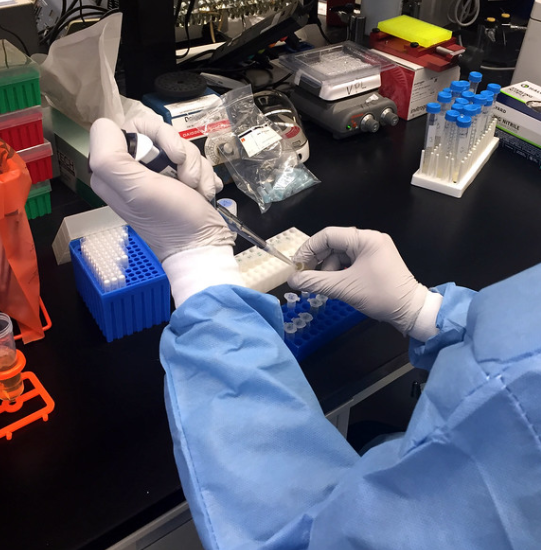
Enzyme-Linked Immunosorbent Assay (ELISA) is one of the most widely used techniques in immunology, molecular biology, and clinical diagnostics. This powerful method allows researchers to detect and quantify proteins, antibodies, hormones, and other biomolecules with high specificity and sensitivity. Antibodies and enzyme-mediated reactions generate a signal, reflecting the presence and amount of the target substance. However, achieving accurate and reproducible ELISA results requires careful optimization and attention to detail. In this blog, we explore key considerations for optimizing ELISA experiments, highlight common pitfalls to avoid, and recommend ELISA kits, buffers, and detection reagents to ensure success.
Enzyme-Linked Immunosorbent Assay (ELISA): Key Considerations for Accurate Results
Posted by
The Protein Man on Jan 29, 2026 4:57:26 PM
0 Comments Click here to read/write comments
Topics: Bioassays, Blocking buffer, ELISA, Primary Antibody, Coating buffer, Secondary Antibody, Antigen, Wash buffer, NAP Blocker, HRP (Horseradish Peroxidase), Alkaline Phosphatase (AP)
The Role of Cell Viability Studies in Modern Drug Development
Posted by
The Protein Man on Mar 5, 2025 12:09:04 PM
0 Comments Click here to read/write comments
Topics: Bioassays, cell health, MTT Assay, WST‐1 Cell Cytotoxicity Assay, Sulforhodamine B (SRB) Assay, ATP Assay, Cell Viability Assay, Drug Development
The Importance of BACs in Genome Sequencing (and Why They've Replaced YACs)
Posted by
The Protein Man on Mar 11, 2021 2:00:00 PM
0 Comments Click here to read/write comments
Topics: Molecular Biology, Bioassays
Alzheimer’s disease (AD) is a progressive neurologic disorder that leads to the death of brain cells. People with this condition usually exhibit mild memory loss, impaired judgment, and vision (spatial) issues during the initial stages, but the symptoms gradually worsen over time.
0 Comments Click here to read/write comments
Topics: Molecular Biology, Cytotoxicity Assays, Bioassays