
In today’s bioscience landscape, researchers face decisions about sample preparation technologies that can significantly impact their experimental outcomes, timelines, and budgets. The choice between two distinct bead-based technologies: magnetic beads and regular (non-magnetic) beads represents a strategic decision that affects workflow efficiency, data quality, and research productivity.
Regular (Non-magnetic) Beads: Passive MatricesRegular beads encompass a wide variety of non-magnetic particles used for solid-phase separation. These beads rely on passive properties for their function.
Key Categories:
- Agarose Beads: Cross-linked polysaccharide matrices
- Sepharose Beads: Highly cross-linked agarose derivatives
- Silica Beads: Silicon dioxide particles for nucleic acid binding
- Polystyrene Beads: Synthetic polymer particles
- Acrylamide Beads: Polyacrylamide-based matrices
- Size Range: 20 micrometers to several millimeters
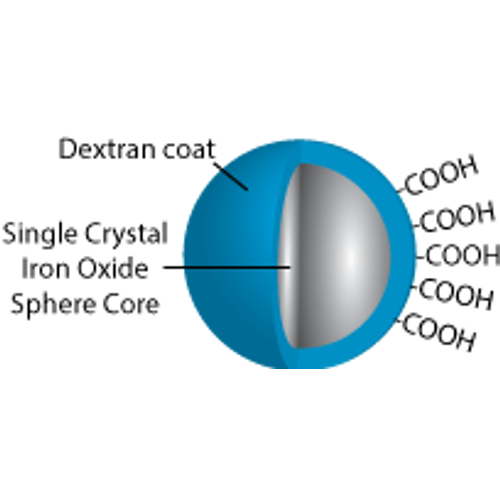
Magnetic beads are microscopic particles containing magnetic materials—typically iron oxide cores—coated with functional surfaces. Their defining characteristic is their responsiveness to magnetic fields, which enables selective manipulation without physical contact.
Key Characteristics:
- Core Composition: Iron oxide (Fe₃O₄ or γ-Fe₂O₃) nanoparticles
- Size Range: 50 nanometers to 5 micrometers
- Surface Coatings: Carboxyl groups, Amines, Silanes, Nitrilotriacetic Acid (NTA), Epoxy.
- Magnetic Properties: Paramagnetic or superparamagnetic behavior
Comparison between Regular and Magnetic Beads Head-to-Head Evaluation
|
Property |
Regular Beads |
Magnetic Beads |
|
|
Binding Capacity and Efficiency |
Surface Area and Binding |
Larger beads offer higher total binding capacity per bead but lower surface area efficiency |
High surface area-to-volume ratio (smaller particles) enables efficient binding, particularly for low-abundance targets |
|
Binding Kinetics |
Require longer incubation times for optimal binding |
Achieve faster binding due to better diffusion in suspension |
|
|
Separation Dynamics |
Separation Dynamics |
Requires centrifugation, filtration, or gravity settling |
Triggered by magnetic field application |
|
Separation times vary (minutes to hours) |
Separation occurs within seconds to minutes |
||
|
Bead pelleting can lead to sample loss |
No pelleting or compaction of beads |
||
|
Resuspension may be challenging |
Supernatant removal is clean and efficient |
||
|
Sample Recovery and Yield |
Recovery Efficiency |
60-90% recovery, with variability based on handling |
Typically, 70-95% recovery, depending on application |
|
Elution Efficiency |
May retain targets within bead matrices |
Often show better elution profiles due to homogeneous suspension |
|
|
Yield Consistency |
Lower reproducibility across experiments and operators. |
Better reproducibility across experiments and operators. |
|
|
Molecular Biology Applications |
DNA Extraction |
Traditional silica-based methods work well for genomic DNA, cost-effective for large scale. |
Superior for automated systems, rapid protocols (30-45 minutes), excellent for fragmented DNA |
|
RNA Isolation |
Remain reliable for total RNA extraction |
Provide faster processing with reduced RNase exposure |
|
|
PCR Cleanup and Size Selection |
Require gel extraction or column-based approaches |
Excel in fragment size selection for next-generation sequencing |
|
|
Protein and Immunology Workflows |
Immunoprecipitation (IP) |
Higher binding capacity for abundant targets. Established protocols with extensive optimization data. Cost-effective for large-scale preparations |
Faster washing cycles. Reduced non-specific binding. Better for low abundance proteins. Easier to automate |
|
Pull-down Assays |
Work well for single-step interactions |
Enable sequential pull-downs from the same sample |
|
Consideration:
Both bead types can achieve high specificity when properly functionalized, but magnetic beads often demonstrate lower non-specific binding in optimized protocols
In immunoprecipitation experiments, magnetic beads allow for rapid washing cycles (2-3 minutes per wash) compared to regular beads requiring centrifugation steps (10-15 minutes per wash).
Decision Framework: Choosing the Right Bead Technology
When to Choose Magnetic Beads:
- Processing >50 samples per week
- Automation is a priority
- Sample integrity is critical
- Working with limited or precious samples
- Rapid turnaround needed
- Implementing new high-throughput assays
- Cell viability preservation is essential
- Microfluidic integration planned
When Regular Beads May Be Preferable:
- Established protocols exist for your application
- Budget constraints are significant
- Processing large volumes per sample (>10 mL)
- Equipment limitations prevent magnetic separation
- Specific bead chemistry is required
- Working with established collaborative protocols
- Field applications without power access
Hybrid Approaches
Many laboratories successfully implement both technologies:
- Use magnetic beads for high-throughput screening
- Employ regular beads for specific applications or large-scale preparations
- Maintain flexibility for diverse research needs
Practical Workflow Comparison
Imagine you need to extract plasmid DNA. A standard protocol using non-magnetic beads involves repeated centrifugation cycles for binding, washing, and eluting the DNA target. Each spin step adds to hands-on labor time and creates opportunities for sample loss during liquid transfers or bead pelleting. In contrast, Silica Magnetic Beads can streamline the entire procedure. DNA binding occurs in solution, after which a simple magnet immobilizes the beads, allowing for quick supernatant removal. Wash steps are performed directly on the magnet, followed by elution into a clean tube. In this scenario, the magnetic approach significantly reduces manual handling, leading to more consistent results between samples and users.
Conclusion: Strategic Technology Selection
The choice between magnetic beads and regular beads represents a strategic decision that should align with your laboratory's specific needs, resources, and research goals. While magnetic beads offer clear advantages in speed, automation, and sample handling for many applications, regular beads remain essential for specific protocols and budget-conscious environments.
Key Insights:
- Not Mutually Exclusive: Many successful labs maintain both technologies
- Application-Specific: The "best" choice depends entirely on your specific needs
- Total Cost Perspective: Consider labor, time, and downstream effects, not just bead costs
- Futureproofing: Consider where your research is heading, not just current needs
- Validation is Key: Always test with your specific samples and applications
Final Recommendation: Invest time in thorough evaluation and pilot testing. For most modern laboratories, implementing magnetic bead technology for high-throughput applications while maintaining regular bead capabilities for specific needs provides optimal flexibility and prepares your lab for diverse research challenges.
G-Biosciences supports both methods with a wide range of reagents for protein purification and nucleic acid isolation. Contact our team to find out more.
Figure 1: Carboxyl Magnetic Beads
Protein Purification Handbook

References
- Gaikwad N. et al. (2024) PLOS One. 19(12):e0315535. doi: 10.1371/journal.pone.0315535.
- Edsai khan, A. et al (2019) Acta Neuropathol Commun. doi.org/10.1186/s40478-019-0862-8.
- Wang, J. et al (2024) Nature Plants. Volume 10. https://doi.org/10.1038/s41477-023-01605-8
- Sharma, Archana et al (2022) ACS OMEGA. https://doi.org/10.1021/acsomega.2c01127
- Silva, M. et al (2024) Current Biology, Volume 34, pages 204-212. https://doi.org/10.1016/j.cub.2023.11.049
- Wang, T., et al (2024). Journal of Biological Chemistry, 300(5), 107278. https://doi.org/10.1016/j.jbc.2024.107278
- Dewing, S. et al (2024) The Journal of Physical Chemistry B. Volume 128, Issue 43. Page 10637.
- Hall, B. et al. (2024) Nat Microbiol 9, 173–184. https://doi.org/10.1038/s41564-023-01549-x