
Life scientists know the frustration of running PCR (Polymerase Chain Reaction), checking the product on a gel or sequencing, and discovering that the amplified product contains unwanted DNA sequence. A single base error or insertion can alter a reading frame, disrupt a protein’s function, and compromise downstream analysis and application. These issues can originate during amplification if the choice of DNA polymerase fails to provide the accuracy the application requires. Selecting the right DNA polymerase enzyme is critical for achieving accurate, reproducible amplification, especially when the application demands high fidelity.
Why Fidelity and Processivity Matters for Accurate PCR
DNA polymerases use single stranded DNA (ssDNA) as a template to synthesize a complementary DNA (cDNA) strand in a 5'→3' direction. Some DNA polymerases additionally have 3'→5' exonuclease activity (proofreading) that allows an incorrect nucleotide to be excised and the correct nucleotide based to be inserted to continue replication. This proofreading activity gives DNA replication higher fidelity.
The family-B DNA polymerases from archaea are especially favored for PCR, due to their high stability at elevated temperatures and the presence of 3'→5' exonuclease proofreading activity. However, the tradeoff of these polymerases is usually their relatively low processivity (the number of nucleotides being processed in a single binding event), which reduces the yield of DNA amplification products. Pfu DNA polymerase from Pyrococcus furiosus, for example, has higher fidelity than other DNA polymerases, making it useful for high fidelity amplifications of smaller, shorter DNA targets but has lower processivity. KOD DNA polymerase, from Thermococcus kodakarensis, has high fidelity due to the presence of a proofreading domain and even higher processivity than Pfu, which may arise from the presence of the thumb domain responsible for binding double-stranded DNA.
A high-fidelity DNA Polymerase protects sequence accuracy throughout many rounds of amplification. It reduces the likelihood that researchers propagate random errors into subsequent PCR cycles. This accuracy matters, particularly when researchers prepare DNA for cloning, recombinant expression, variant analysis, or sequencing workflows.
When Standard Polymerases Are Sufficient
Taq DNA Polymerase (Figure 1) remains a widely used enzyme for routine amplification. Its durability at high temperatures and ability to produce results quickly make it highly useful for routine use, such as confirmation of a target template and colony PCR.
Taq DNA Polymerase shows its limitations when the experiment demands the most fidelity. Without proofreading activity, misincorporation events accumulate during cycling. While short amplicons may tolerate this, longer amplicons and templates intended for expression studies do not. Even subtle sequence variations (mutations) introduced by low fidelity Taq can complicate the researchers' interpretations or produce misleading results.
When High-Fidelity Polymerases Become Essential
The use of high-fidelity DNA Polymerase in PCR is essential for reducing the amplification errors in PCR products for downstream processing. Several thermostable DNA polymerases with 3’→5’ exonuclease-dependent proofreading activity (Pfu, Vent, Deep Vent and ULTima) have been introduced for high fidelity PCR amplification. However, early generation high-fidelity DNA polymerases tend to display low processivity. For example, Pfu DNA polymerase has fidelity that is 7X that of Taq DNA polymerase, but its synthesis rate is less than half that of Taq polymerase. Therefore, there is a need for DNA polymerases that have been designed precisely for these research and industrial applications, where high-fidelity and processivity are required
High-fidelity DNA Polymerase excel in applications that involve cloning, mutagenesis, sequencing preparation, or long-range amplification. They help preserve true genetic variation and support the efficient expression of recombinant proteins, which gives researchers greater confidence that the amplified product reflects the intended sequence. Many teams report reduced troubleshooting and fewer repeated reactions when they choose a high-fidelity enzyme from the beginning of their process.
Matching Polymerase Characteristics to the Template
Amplification templates differ widely in sequence composition and structural complexity. Challenges can include:
- GC-rich regions that resist primers annealing
- Long targets that require sustained extension
- Secondary structures that interrupt polymerase movement
Choosing an enzyme that can handle difficult templates and provide reliable amplification can improve overall research outcomes. Some high-fidelity enzymes extend more slowly than Taq. Others produce blunt-ended products, which may affect cloning strategies. Researchers must weigh these characteristics against the importance of workflow to the accuracy of results. In many cases, the improved sequence integrity more than compensates for any small adjustments to protocol conditions or vector design, because the final product is far more reliable and requires far less troubleshooting.
Practical Considerations before Amplification
Before selecting a DNA Polymerase enzyme, consider the following:
- Assess the level of sequence accuracy needed
- Evaluate the length and structure of the target
- Determine how the amplified product will be used downstream
Some PCR amplifications only need to confirm whether a target sequence is present, not whether every base is accurately replicated. However, gene cloning, variant detection, CRISPR editing, and protein expression depend on high sequence integrity. In these settings, a proofreading polymerase supports more accurate amplification and minimizes the need for additional validation steps.
Build PCR Success Through Careful Polymerase Selection
Selecting the right DNA polymerase is a foundational step in DNA amplification. The ideal choice supports accurate synthesis and delivers consistent performance across multiple cycles so you can trust that the amplified DNA will work in your downstream experiments. Evaluating fidelity and understanding how your template behaves within the broader workflow helps establish a strong starting point for successful results.
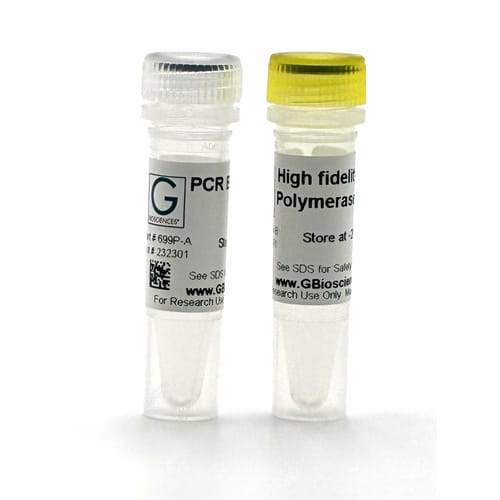
In addition to offering Taq DNA Polymerase and Pfu DNA polymerase, G-Biosciences designed the most robust multi-functional de novo DNA polymerase consisting of heterologous domains based on bioinformatics and structure-guided rational protein engineering of thermostable DNA polymerases - High-fidelity DNA Polymerase (Figure 2). Existing fusion polymerases are based on only integrating a heterologous domain to a functional DNA polymerase. G-Biosciences have improved the current DNA amplification methodology by constructing de novo DNA polymerases containing heterologous domains from at least two DNA polymerases with high fidelity and high processivity, and a processivity enhancing double-stranded DNA binding protein, Sso7d.
Figure 1: The structure of Taq DNA Polymerase (PDB: 1TAU)
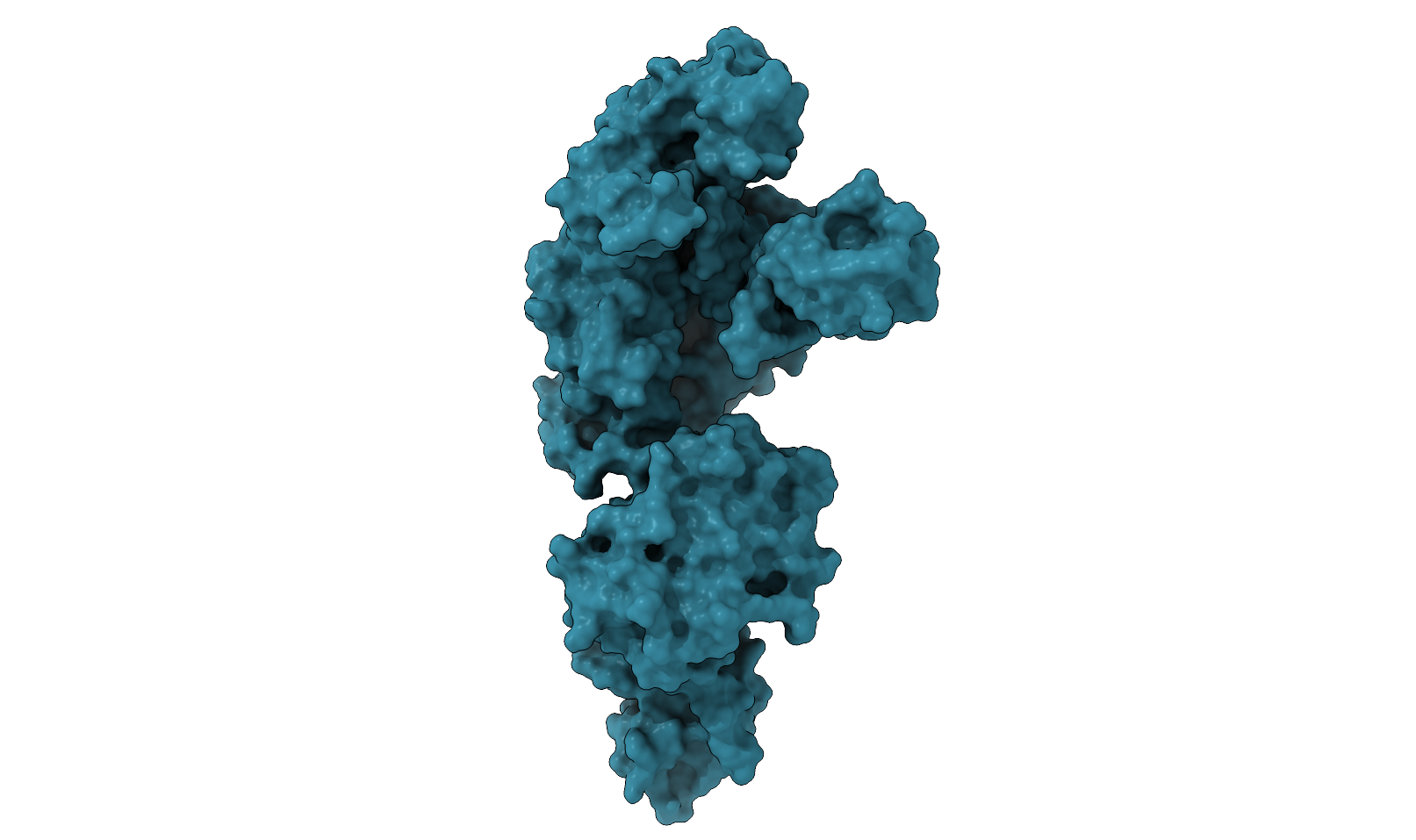
Figure 2: High Fidelity DNA Polymerase
References:
- Kumari, M. et al (2023) CEREAL RES COMMUN. https://doi.org/10.1007/s42976-023-00358-6
- Negi N. et al. (2024) Microb Pathog. 193:106756. doi: 10.1016/j.micpath.2024.106756.
- Pujadas Liwag, E.M. et al. Genome Biol 25, 77 (2024). https://doi.org/10.1186/s13059-024-03212-y
- Moon H, Donahue LR, Choi E, Scumpia PO, Lowry WE, Grenier JK, Zhu J, White AC. Cell Stem Cell. 2017 Nov 2;21(5):665-678.e6. doi: 10.1016/j.stem.2017.09.001.
- Kiran, R. et al (2022) ARCH MICROBIOL. https://doi.org/10.1007/s00203-022-02846-5
- Kusampudi, Varun et al (2022) PLANT PROD SCI. https://doi.org/10.1080/1343943X.2022.2156892