ask-protein-man-banner

Subscribe via E-mail

Your email:

Follow The Protein Man!

Technical Handbooks

hb-protein-assays-hp

The Protein Man's Blog | A Discussion of Protein Research

Current Articles | RSS Feed RSS Feed

7 Common Problems with Western Blotting Solved


The aim of this blog is to highlight some of the routine problems that occur with Western blotting and suggest possible solutions.  The 7 common problems are:

  1. Uniform High Background
  2. Blotchy or Speckled Background
  3. Weak or No Signal
  4. Non-Specific Bands
  5. Diffuse Bands
  6. Ghost/ Hollow Bands or Brown/ Yellow Bands on Membrane
  7. Blank Areas

1. Uniform High BackgroundHigh Background Western blot

High Concentration of Antibody

Reduce the concentrations of antibodies. High concentrations of antibodies will lead to a coating of the membrane with antibodies due to saturation, resulting in a uniform signal across the entire membrane. High antibody concentration may also result in the development of non-specific bands.

Interference from Incompatible Blocking Agent

Many blocking agents are protein based, and some are sera protein based, such as Bovine serum albumin.  Antibodies produced in animals have an inherent problem in the fact that they can interact with animal proteins used in blocking agents.  As the blocking agent is on the entire surface of the membrane then a uniform signal will be seen.  The best solution is to find a non animal blocking agents, such as G-Biosciences NAP-BLOCKER.  Other alternatives are protein-free blockers or non mammalian protein blockers.

Some blocking agents may actually bind to the antigen of interest and therefore prevent antibody binding and subsequent detection.

Non-Specific Sites Insufficiently Blocked

Optimization of the blocking conditions is essential for clear backgrounds.  Factors to investigate are blocker tube (see above), length of incubation and temperature of incubation.  The inclusion of Tween 20 at a final concentration of 0.05% can also improve blocking.

Insufficient Washing

Improper washing will result in excess antibody remaining on the blot.  Increase both the volume, length and number of wash steps.  For improved washing, use wash buffers with Tween 20.

Overexposure of Membrane

Simple solution: Reduce exposure times!

Poor Handling of Membrane

Membranes poorly hydrated before transfer of Western blot development.  PVDF requires methanol for proper hydration.  If the membrane dries out during the procedure a high background may occur. Old membranes can also severely affect the quality of your blots

Buffers Contaminated

The presence of bacteria or other contaminants will severely affect blotting. Replace old buffers.

2. Blotchy or Speckled BackgroundsBlotchy speckled Western blot

 

Conjugated Enzyme Antibody Conjugated

Conjugation of the secondary antibody may result in intense spots on the membrane, producing a speckled pattern. Filter the conjugate through a 0.2µm filter may resolve the issue.  If not use a fresh antibody.

Dirty Equipment

The presence of contaminants on dirty equipment may result in blotchy or speckled patterns.  Ensure all equipment is clean prior to use.  Small gel pieces on the membrane may also cause this effect.

High Concentration of Antibody

Interference from Incompatible Blocking Agent

Non-Specific Sites Insufficiently Blocked

Insufficient Washing

Overexposure of Membrane

Poor Handling of Membrane

Buffers Contaminated

3. Weak or No SignalWeak or no signal on Western blot
Improper Transfer or Protein

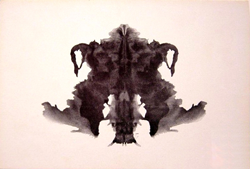
Poor protein transfer to the membrane is a routine, but often overlooked problem.  If there's no protein, there will be no signal.  The presence of trapped air bubbles will prevent protein transfer resulting in blank areas on the developed blot. A quick quality control step can be performed after transfer to check transfer by using a reversible stain, such as Ponceau-S or commercially available stains.  SWIFT Membrane Stain is a 30 second reversible stain that offers greater user friendly attributes compared to Ponceau-S. 

If after checking the membrane and poor transfer has occurred, explore other options such as a unique product from G-Biosciences that reduces transfer times, prevents overheating and aids high molecular weight protein transfer. Our Swift Transfer Pads should help.

The use of 20% methanol in transfer buffers should improve transfer. For small molecular weight proteins reduce transfer times and use membranes with smaller pore sizes.

Low levels of antigen on the membrane, as a result of poor transfer or insufficient loaded on gel, may be a cause.  If possible use higher levels of antigen.

Antibody Concentrations

Too high a concentration of antibody can not only cause high backgrounds, but can also use up all the substrate before it can be detected, resulting in no or weak signal. An indication of this would be brown/yellow bands on the membrane or ghost/ hollow bands on the films.

Too low a concentration will also result in a weak or no signal.  Ensure to optimize both primary and secondary antibodies.

Conjugated Enzyme Inhibited

The presence of sodium azide in buffers as a preservative to prevent bacteria and other contaminants growing can inhibit HRP and others enzymes.  This will result in weak or no signal.  Avoid the use of sodium azide during Western blotting.

Detection Substrates Inactive

If the substrates for Western blot detection have deteriorated weak or no signal will occur.  Ensure substrates are within their shelf life and ensure no cross contamination occurs during handing of 2-3 component systems.  Detection substrates can be quickly tested by preparing in a microfuge tube and adding a small amount of enzyme conjugated enzyme.  For chemiluminescent reagents add in dark room to visualize the blue light.

Excessive Stripping

If a membrane has been stripped and reprobed and the signal is weaker than expected then the stripping method may be too harsh and the antigen sites have been destroyed.  Use a mild stripping solution, such as Western ReProbe that requires no boiling, denaturants or SDS.  Also limit the number of times a blot is stripped.

Exposure Time To Short

Expose to film for longer and ensure that the blot is exposed as soon after substrate additon as possible.

Interference from Incompatible Blocking Agent

4. Non Specific BandsNon specific bands on Western blot

SDS Interfering with Blot

The presence of the strong, anionic detergent SDS on the membrane or in buffers can result in non specific band development caused by antibodies binding to the charged SDS molecules associated with the proteins. Ensure the blot is washed extensively after transfer and no SDS is used during Western blot development.

High Concentration of Antibody

5. Diffuse BandsDiffuse bands on Western blot
High Protein Concentration

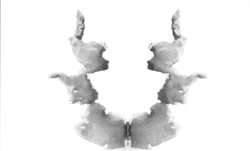
High protein concentrations can result in diffuse protein bands after blot development.  Reduce the amount of protein initially loaded.
High Concentration of Antibody

6. Ghost/ Hollow Bands or Brown/ Yellow Bands on Membrane

Antibody Concentrations

7. Blank AreasBlank areas on Western blot

Improper Transfer or Protein

Comments

Hi,  
I am having trouble with my westerns.....my transfer is good but my protein samples don't show up AT ALL after exposure but my protein marker bands do? 
Any advice?
Posted @ Saturday, September 22, 2012 2:22 PM by Robyn
This was immensely helpful, thanks! :)
Posted @ Thursday, October 04, 2012 10:49 PM by Lab Rat
not getting bands inspite i had good transfer confirmed by staining the gel in comasie blue and the membrane also stained in boncuie and showed bands of proteins
Posted @ Thursday, November 01, 2012 6:41 AM by mona
Mona, it sounds like your transfer is OK as you are seeing protein on the membrane with Ponceau stain. The reason you are not detecting any bands sounds like an issue with your antibodies. Some antibodies do not work with WEstern blotting as they are raised against native proteins and are confirmationally specific. As the proteins on the membrane are denatured the binding site may not be presence. I would try a different antibody if possible. Also try varying concentrations of your primary and secondary antibodies.
Posted @ Thursday, November 01, 2012 8:51 AM by Colin Heath
I want to detect 1.7 Kd peptides by western blots. I am doing a overnight transfer at 90mA using a 20% methanol byffer. My gel is 15% and i am using a 0.22um nitrocellulose membrane. But I am not able to detect any bands on the gel. Please suggest!
Posted @ Friday, November 09, 2012 6:35 PM by Maithili
Hi, 
I'm having problems with consistency in detecting cleaved caspases-I KNOW they should be cleaved, but sometimes the antibody "sees" them, sometimes not. It was suggested by a coworker that perhaps pseudomonas was growing in the milk buffer and cleaving the HRP, but that seems far-fetched to me. The procaspase is visible, so theoretically the cleaved should be recognized by the antibody as well. Are antibodies just generally not very reliable? Thanks!
Posted @ Thursday, November 15, 2012 11:27 AM by Samantha
Maithili, Are you using a Tris/Glycine gel or a Tricine gel? If you email your question to technical@gbiosciences.com I may be able to provide some suggestions.
Posted @ Thursday, November 15, 2012 12:54 PM by Colin Heath
Samantha, You could try a different blocking agent as sometimes these do interfere with antibody binding. 
As you say that sometimes you see them and sometimes you don't suggests it's not the antibody itself. Are you sometimes seeing the actual Caspase or just the Procaspase? Do you have a protease inhibitor cocktail present to prevent general degradation of the protein Caspase? Could you tag the Caspase with a tag, such as Biotin and probe with Streptavidin-HRP? Feel free to email technical@gbiosciences.com with more details and we'll try our best to help out
Posted @ Thursday, November 15, 2012 12:59 PM by Colin Heath
Hello! I have a trouble with my western blot and I need help! 
 
I did a western blot to detect Akt / PKB (molecular weight 60 kDa) and as result got two bands: a band of medium intensity that matches the height of the Akt / PKB and a very intense band at a height of approximately 30 kDa, I must say that the sign of the latter band is much stronger than the weight of 60 kDa. 
Which one should I consider bands for measurement? 
I consider that no band corresponding to the weight of 60 kDa as nonspecific, even though its strength is much stronger than if it corresponds to molecular weight of 60 kDa? 
 
Hope you can help me. 
 
Thanks!!!!!
Posted @ Monday, December 17, 2012 2:12 PM by nadia
Nadia, There could be various reasons for the second band. THe first could be degrdation of the 60kDa protein to the 30 kDa protein. Do you have a protease inhibitor cocktail in your lysates? 
Have you tried a different antibody? Maybe the one you are using has a similar motif as Akt?
Posted @ Monday, December 17, 2012 2:39 PM by Colin
Hi guys, I know its probably a simple question, but I can't seem to figure out why it is important to load equal amounts of protein per sample in an immunoblot assay. I understand the need for loading controls, but this is puzzling me. Any help would be greatly appreciated.
Posted @ Friday, December 28, 2012 10:30 AM by sam
Sam, 
The primary reason for loading equal amounts of protein is to allow you to compare up or down regulation of your protein of interest. If your loading controls, for example actin, are consistent and there is a difference in your protein of interest then whatever your experimental differences had an affect.  
Although equal amounts of proteins is not always the case. For example in subcellular fractionation the various fractions maybe in different final volumes. In this case you'd want to load similar proportions or percentages of the final volumes.
Posted @ Wednesday, January 02, 2013 8:49 AM by Colin
We are working on Nedd8 related pathways and currently we are facing problems blotting for the NEDD8 antibody itself. We bought the antibody from cell signaling company and tried to use at different concentrations ranging from 1:250 - 1:1000, still we do not see any bands related to nedd8. Do you have some tips, how to circumvent this problem 
 
This is a 10 kd Protein, so i will transfer only for 1 hour this time
Posted @ Tuesday, January 15, 2013 2:25 PM by karunakar
Include a second piece of membrane behind the first and stain both with a membrane stain (Swift membrane Stain or Ponceau) to see if 10kDa proteins are passing through the membranes. 
Is antibody raised against native protein or peptide? If the samples are denatured and if antibody is recognizing a structural motif then it may be destroyed. Try non denaturing conditions
Posted @ Friday, January 18, 2013 9:16 AM by Colin
I am looking at differences in lipid rafts from treated and untreated samples after ultracentrifugation using sucrose gradients.I bought a santa cruz antibody, Flotillin 1 (1-1000 dilution) for western blots(WB).When I do WB i add the chemiluminescent HRP substrate and I get a strange band appearing along the entire length of the blot, and when I take the blot out, there is a yellow stain present along that line. I can also see my bands for flotillin-1, so its not a huge problem. But it makes the image appear dirty. I have changed all my buffers, many times, and each time the same occurs.
Posted @ Friday, January 25, 2013 7:58 AM by shelly
Shelly, 
Does the band run the length of the lane or across all lanes? One thing to try is to clean the samples before loading on to the gel. Our PAGEperfect will remove all interfering agents and allow just protein to run on the gel. In addition our FOCUS Signal kit purifies lipid rafts and includes and electrophoretic clean up step.  
The yellow stain on the membrane is normally indicative of very high levels of HRP, so maybe whatever that interfering agent is is interacting with your HRP antibody
Posted @ Friday, January 25, 2013 8:15 AM by Colin Heath
Hi, I had a problem my antibody which was raised against the c-ter of the protein is not able to detect the endogenous but able to detect the transfected GFP tagged construct of the protein and I confirmed the size by GFP antibody. Couls please let me know any possible explaination why my antibody is not able to detect endogenous. The antibody is validated for Immunoflorescence.
Posted @ Sunday, January 27, 2013 8:14 PM by vissu
Vissu, 
My first thought is the levels of endogenous protein. These may be too low to detect by Western blotting.
Posted @ Friday, February 01, 2013 10:47 AM by Colin Heath
I like to know whats the maximum concentration of protein can be loaded on SDS-PAGE for western blotting. I am loading 50microgram to detect the endogenous protein vs overexpressing of the same protein. My antibody able to detect the overexpressing protein but no the endogenous level.
Posted @ Monday, February 11, 2013 5:04 AM by sriram
Transfer Help 
When you take the gel out of the stand after running it, what side is the front and should be in contact with the membrane when making the sandwich?
Posted @ Wednesday, February 13, 2013 10:39 PM by Sarah
Sarah, 
There is no front or back to the gel. Either side will allow transfer. 
Thanks
Posted @ Thursday, February 14, 2013 9:03 AM by Colin
i,  
I am having trouble too with my westerns.....my transfer is good, the Ponceau show the bands, but my protein samples don't show up AT ALL after exposure but my protein marker bands do? In the loading control with com b- actin the bands are shown. 
Any advice? 
 
Thanks
Posted @ Tuesday, February 19, 2013 12:39 PM by Suély
Suély, 
If your loading control bands are showing and you have good transfer then I would explore the primary antibody. Not all antibodies are suitable for Western blotting, especially ones raised against a structural conformation. Try adjusting ratios of antibody.
Posted @ Friday, February 22, 2013 3:38 PM by The Protein Man
Hi,  
My western blot problem is puzzling. I get good bands for the protein of interest but the housekeeping gene doesn't show equal loading always. I have to get lucky at times to get good b-actin. sometimes it shows very distorted bands or bands trailing off to either ends or sometimes they appear as if though they are chewed up. The most confusing part is that ponceau stain doesn't work on my membrane or it shows very blurry bands for few seconds and it disappears. If I am getting good bands for the protein of interest, then it can not be transfer problem or can it be? Can you please suggest me anything that I can try to figure out if this is a transfer problem or something else that's causing unequal loading problem. thanks
Posted @ Monday, February 25, 2013 9:14 PM by Priya
Priya, 
Pounceau-S, to be perfectly honest, is a pain to use. I'd recommend downloading our comparison of Ponceau and Swift Membrane Stain (http://info.gbiosciences.com/an-swift-membrane-stain/). This will allow you to see if you are getting optimal transfer. 
Broken and smeared bands may be due to some contaminants and for this I'd recommend PAGEperfect to remove contaminants prior to electrophoresis.(http://info.gbiosciences.com/an-pageperfect/) 
Hope this helps
Posted @ Wednesday, February 27, 2013 11:25 AM by The protein Man
The #1 problem with Westerns is bad antibodies. Get some positive AND negative control samples on your blot so that you can verify the specificity of your antibody: does it recognize what you want it to recognize? is it recognizing something else? First, evaluate your antibody. Then use that antibody to evaluate your samples.
Posted @ Thursday, February 28, 2013 11:45 AM by DT
hi 
i have problem with detecting claved caspase 3 ( 17 KD) ACTULLY the PROFORM BAND is picked up by the antibody and i have seen decrease in band density of proforme caspase 3 (?32kd) at treatment condition but i could not see the 17 kd , do you think the sonication help to detect this cleaved caspase 3. plz help me
Posted @ Saturday, March 16, 2013 3:11 PM by sumia
Hi... 
 
I have problem with my SDS PAGE. My protein only half of the gel. I dont know what is the problem. Please help me.
Posted @ Thursday, March 21, 2013 11:32 PM by As
Hi,  
 
I am just wondering why I visulize a pattern of lysate bands on one of 1st my western blot,but I do not see any lysate bands anymore when I repeated the experiement. I used the same immunoprecipitation antibodies, as well as, the same blotting antibodies.  
 
Thank you
Posted @ Saturday, March 23, 2013 1:46 AM by Mon
Hi everyone, 
 
I have trouble in obtaining good signal for small protein (~11kDa). I've loaded 30 ug of whole cell lysate per lane and ran it on 15% SDS-PAGE gel. The protein was blotted to 0.2 micron PVDF using semidry method. 
 
I've taken several steps to in order to improve the signal which included: 
(a) increasing the amount of primary and secondary antibodies. 
 
(b) changing the transfer buffer recipe from 25 mM Tris, 192 mM Glycine to 25 mM Tris, 192 mM Glycine, 20% Methanol. I read it somewhere that Methanol is needed in transferring small proteins as it stablises the gel dimension and avoids swelling which can cause loss in protein resolution. Methanol can also strip SDS which improves binding of protein to PVDF 
 
(c) Reducing gel equlibration time in transfer buffer (25 mM Tris, 192 mM Glycine, 20% Methanol) to 8 minutes to prevent diffusion of the small protein which happens very often if equlibration period is prolonged. 
 
(d) The transfer was performed at 15 V but instead of 1h, I've reduced it to 45 minutes to prevent blowthrough of small proteins 
 
(e) I checked on the filter paper. The prestained protein marker did not blot into the filter paper, so I suppose blowthrough didn't really take place. 
 
(f) I also ran and stained parallel gel (not meant to be blotted) with Coomassie Blue and compared it with a gel stained after transfer. I found out that lower MW proteins were well-transferred. 
 
With this observation and the changes in the protocol, I just couldn't understand how come the signal detected can be that low? Previous literature shows that my cells express that 11kDa protein 
 
I hope anyone of you can offer your insight and opinion. I certainly appreciate if anyone can share tips and solutions to get better signal in detecting small proteins. 
 
Thank you very much. 
 
Regards, 
 
Kitson
Posted @ Wednesday, March 27, 2013 12:32 PM by Kitson
Hi- 
After washing the stain off of the ponceau S, I get this white bands/transparent bands on my PVDF membrane during blocking- have you heard this before?
Posted @ Thursday, April 25, 2013 2:31 PM by Marvin
I've not heard of this. What;'s your Ponceau compostion and your blocking buffer compostion? You could also try a different stain, such as our Swift Membrane Stain that outperforms Ponceau in several ways. Click here for more info
Posted @ Tuesday, April 30, 2013 9:18 AM by Colin Heath
Post Comment
Name
 *
Email
 *
Website (optional)
Comment
 *

Allowed tags: <a> link, <b> bold, <i> italics